What might interest you

Industrial Automation

Industrial systems driven by data, not guesswork.

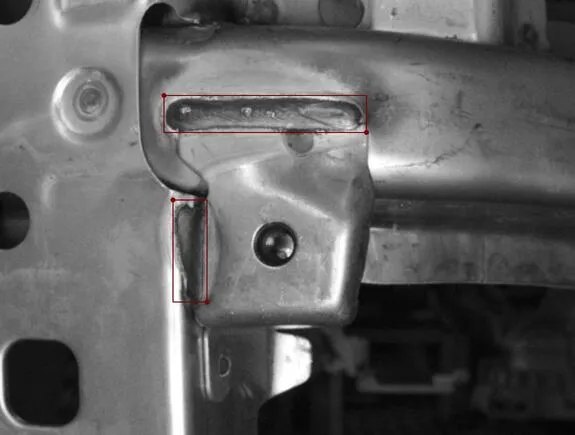
Industrial automation hits its limit as soon as environments become unpredictable — material variability, unplanned downtime, noisy sensors. We work to make those environments observable and controllable: by structuring data flows, integrating decision models close to control systems, and sustaining operational diagnostics over time. Our industrial vision work — including weld-defect detection to aerospace-grade requirements — reflects that approach: models trained on reference benchmarks, validated in real conditions, deployed with traceable performance criteria.

Industrial Automation

Image credit: LoHi-WELD: a novel industrial dataset for weld defect detection and classification (IEEE Access, 2024)

BibTeX
@article{Sylvio2024,
  title={LoHi-WELD: a novel industrial dataset for weld defect detection and classification, a deep learning study, and future perspectives},
  author={S.B. {BLock}, R.D. da {Silva}, A.E. {Lazzaretti} and R. {Minetto}},
  journal={IEEE Access},
  year={2024},
  volume={1},
  number={1},
  issn={2169-3536},
  pages={1-12},
  doi={10.1109/ACCESS.2024.3407019},
  url={https://ieeexplore.ieee.org/document/10540490}
}

Work & concrete cases

Online weld quality control

Aerospace-level reliability targets cannot be met with discontinuous manual inspection — structurally. We developed vision models for defect detection and classification in real operating conditions, trained on the LoHi-WELD benchmark and supplemented with internal datasets. Undetected defects dropped, and every reject decision is now documented and auditable.

Production site monitoring

When visibility into line health is insufficient, maintenance defaults to reactive — and costly. We deployed monitoring platforms with industrial sensor integration and centralized dashboards, catching drift before it escalates and cutting diagnosis cycles significantly.

What it changes in practice

Control moves from spot checks to continuous signal streams. Maintenance shifts from reactive firefighting to event-based prioritization.

What we bring to the table

  • Integration close to the process

    Data and models wired where decisions are made — line, cell, PLC — not only in downstream reporting.

  • Vision tuned to your reality

    Training and validation on your real production failure modes, enriched with sector benchmarks when relevant (e.g. weld QC, LoHi-WELD).

  • Real-time supervision

    Monitoring, sensors, and alerts to shorten the path from shop-floor signal to diagnosis before drift becomes downtime.

  • Traceable QC decisions

    Criteria, thresholds, model versions, and reject/release decisions documented — usable for audit and continuous improvement.

  • Edge, cloud, or hybrid

    Deployment matched to latency, confidentiality, and resilience: on-line edge compute, central aggregation, or both.

Cookies & analytics

We use necessary cookies and, optionally, cookies for analytics and SEO. Choose your preferences below. Your consent is valid for up to 13 months. Cookie settings.